



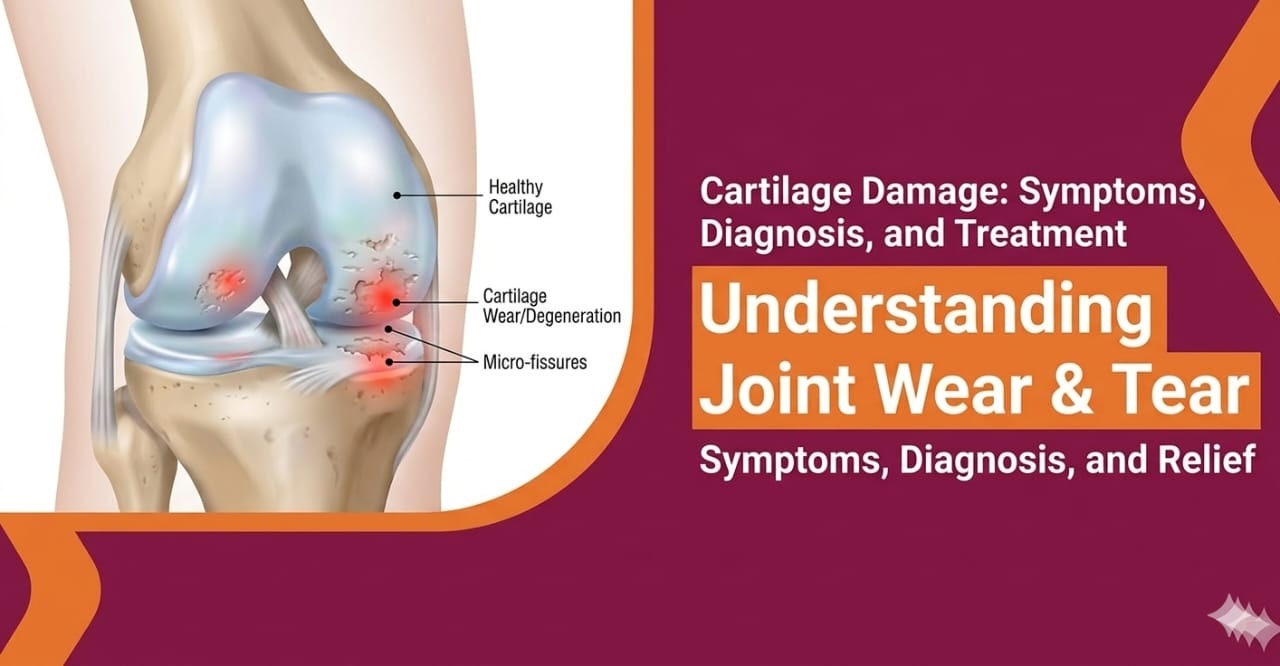
Cartilage plays an important role in keeping our joints flexible, comfortable, and capable of smooth movement. It is a strong, smooth tissue that covers the ends of bones and helps reduce friction when joints move. When this protective tissue becomes worn, torn, or injured, it can lead to cartilage damage, causing pain, stiffness, swelling, and difficulty with movement. Cartilage damage is particularly common in weight-bearing joints such as the knees and hips, although it can affect other joints as well. Understanding the causes of cartilage damage, recognizing the symptoms early, and receiving appropriate treatment can help protect joint function and improve quality of life.
What Causes Cartilage Damage?
There are several reasons why cartilage may become damaged. Sports injuries, falls, accidents, repetitive stress, and sudden twisting movements can result in a cartilage injury or cartilage tear. Age-related wear and tear can also gradually weaken cartilage, particularly in people with osteoarthritis. Obesity, previous joint injuries, poor biomechanics, and certain medical conditions may increase the risk of joint cartilage damage. In the knee, damage to the meniscus or supporting ligaments can sometimes contribute to further cartilage deterioration. Knee cartilage damage may develop gradually or occur suddenly following an injury.
Cartilage Damage Symptoms
The symptoms can vary depending on the location and severity of the injury. Common cartilage damage symptoms include joint pain, swelling, stiffness, tenderness, and reduced range of motion. Some people may experience clicking, catching, locking, or a grinding sensation while moving the joint. Symptoms of cartilage damage in the knee may become more noticeable while walking, climbing stairs, squatting, running, or participating in sports. Persistent joint pain and cartilage damage should not be ignored, particularly when symptoms interfere with normal daily activities.
Diagnosis of Cartilage Damage
A proper diagnosis of cartilage damage begins with a detailed medical history and physical examination. An orthopedic specialist may assess joint movement, stability, swelling, tenderness, and areas of pain. X-rays can help identify changes in bone structure and arthritis, although cartilage itself is not clearly visible on standard X-rays. Depending on the suspected injury, an MRI may provide a more detailed view of cartilage, ligaments, menisci, and other soft tissues. In some situations, diagnostic arthroscopy may be recommended to directly examine the joint. Early evaluation can help determine the extent of articular cartilage damage and guide an appropriate treatment plan.
Treatment for Cartilage Damage
The treatment for cartilage damage depends on factors such as the patient’s age, activity level, location and severity of the injury, and the overall condition of the joint. Mild or moderate cases may initially be managed with non-surgical treatment for cartilage damage, including activity modification, appropriate medication, physiotherapy, weight management, and exercises designed to strengthen the muscles surrounding the affected joint. These approaches can help reduce pain and improve joint function.
When conservative treatment does not provide adequate relief, surgical options may be considered. Cartilage repair surgery can be used in selected patients with specific cartilage defects. Procedures such as arthroscopic cartilage repair, microfracture, or cartilage restoration techniques may be appropriate depending on the injury. The goal of cartilage repair is to improve the joint surface, reduce symptoms, and preserve joint function whenever possible.
Cartilage Repair and Recovery
Recovery from cartilage treatment varies according to the type of injury and procedure performed. Following surgery, a structured rehabilitation program may be recommended to gradually restore movement, strength, balance, and function. Patients should follow their orthopedic specialist’s instructions regarding weight-bearing, exercises, and return to sports or other activities. Although cartilage regeneration is naturally limited, advances in orthopedic treatment continue to provide options for selected patients. Maintaining a healthy weight, strengthening supporting muscles, avoiding unnecessary joint stress, and treating injuries promptly can contribute to cartilage damage prevention.
When Should You See an Orthopedic Specialist?
Persistent pain, swelling, stiffness, locking, or reduced joint movement may indicate damaged cartilage or another underlying joint problem. Early consultation can help identify cartilage damage in the knee, knee cartilage injury, or a knee cartilage tear before symptoms become more severe. In advanced cases, significant cartilage loss in knee joints may contribute to arthritis and may eventually require joint replacement. A specialist can explain whether conservative care, cartilage repair, or joint replacement is most appropriate.
Conclusion
Cartilage problems can affect mobility and everyday activities, but timely diagnosis and appropriate care can make a significant difference in cartilage damage recovery. If you are experiencing persistent joint pain or symptoms associated with knee cartilage damage, consulting an experienced orthopedic doctor in Hyderabad can help you understand your treatment options. Depending on the condition, orthopedic care may range from rehabilitation and cartilage repair to advanced joint replacement procedures. A knee replacement surgeon or hip replacement surgeon can evaluate patients with advanced joint damage, while an orthopedic pediatric surgeon can provide specialized care for children with orthopedic conditions. For comprehensive orthopedic evaluation and treatment, patients can consult Dr. Madhu Reddy (orthopedic surgeon) at MM Ortho Hospital, where appropriate treatment can be planned based on the individual’s condition and functional needs.