



Introduction
The shoulder is one of the most flexible joints in the human body, allowing us to lift, rotate, and move our arms in different directions. Rotator cuff injuries are common conditions that affect the tendons and muscles responsible for stabilizing the shoulder joint. These injuries can occur due to accidents, sports activities, repetitive movements, or age-related changes. Understanding rotator cuff injury symptoms, identifying the causes, and receiving timely treatment can help restore shoulder function and prevent further complications.
What Is a Rotator Cuff Injury?
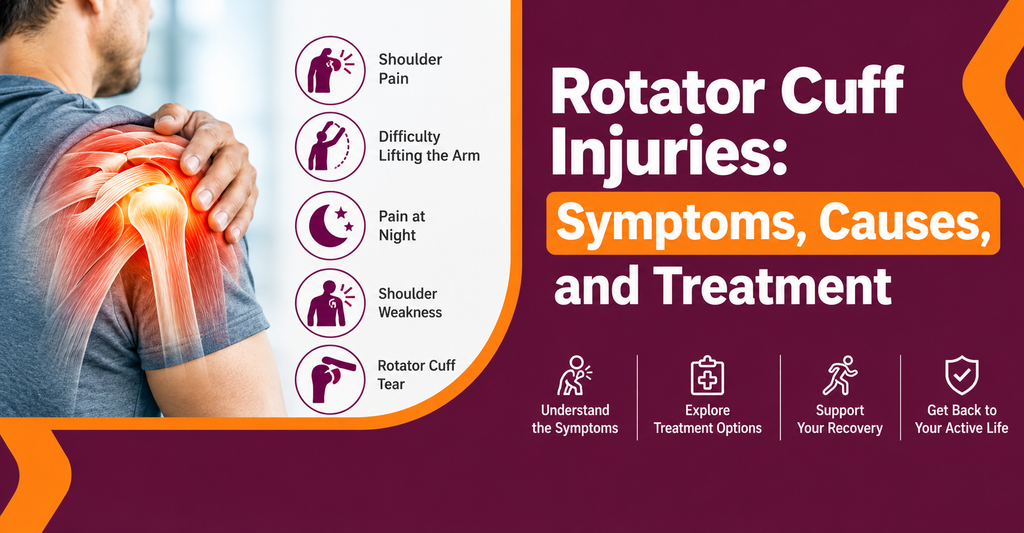
A rotator cuff injury is a condition that affects the group of four muscles and tendons surrounding the shoulder joint. These muscles and tendons help keep the upper arm bone securely in the shoulder socket while allowing smooth movements such as lifting, rotating, and reaching with the arm. Rotator cuff injuries can occur due to sudden accidents, sports activities, repetitive overhead movements, or age-related wear and tear.
Common types of rotator cuff injuries include tendon inflammation (tendinitis), tendon irritation (tendinopathy), and partial or complete rotator cuff tears. People with this condition may experience shoulder pain, swelling, weakness, difficulty lifting the arm, and discomfort while sleeping on the affected side. In some cases, the pain may gradually develop over time, while in others, it may begin suddenly following an injury.
Rotator Cuff Injury Causes
There are several causes of rotator cuff injuries. Repeated overhead movements, heavy lifting, sports activities, and prolonged strain on the shoulder can gradually damage the tendons. Athletes involved in swimming, tennis, cricket, and badminton may be particularly vulnerable to sports-related shoulder injuries. Accidental falls and sudden pulling movements can also cause acute injuries.
Age-related tendon changes may increase the likelihood of a rotator cuff tear, even during routine activities. Poor shoulder mechanics, repetitive work, and inadequate recovery after strenuous exercise may contribute to discomfort. Identifying the underlying rotator cuff injury causes is important for selecting suitable treatment and reducing the risk of recurring problems.
Rotator Cuff Injury Symptoms
Recognizing rotator cuff injury symptoms early can help prevent the condition from worsening. The most common complaint is shoulder pain, especially when raising the arm, reaching overhead, or lifting objects. Some individuals experience shoulder pain at night, making it difficult to sleep on the affected side. Shoulder weakness, reduced movement, and shoulder stiffness and pain may also develop.
Other signs of a rotator cuff tear include difficulty reaching behind the back, pain during everyday activities, and a reduced ability to lift the arm. Symptoms of rotator cuff damage may appear gradually or begin suddenly after an injury. Persistent shoulder painw while lifting the arm should not be ignored, particularly when accompanied by significant weakness or restricted movement.
Rotator Cuff Injury Diagnosis
An accurate rotator cuff injury diagnosis begins with a medical examination. An orthopedic specialist evaluates shoulder movement, muscle strength, tenderness, and the circumstances surrounding the injury. The doctor may perform specific physical tests to assess tendon function.
Imaging tests may be recommended when necessary. X-rays can help identify bone abnormalities or other causes of shoulder pain, while an MRI for rotator cuff tear can provide detailed information about tendon damage. Ultrasound may also help evaluate the tendons. The findings allow the specialist to determine whether the injury involves inflammation, a partial tear, or a complete tear.
Rotator Cuff Injury Treatment Options
The appropriate rotator cuff injury treatment depends on the severity of the injury, the patient’s age, activity level, and overall shoulder function. Many mild injuries improve with non-surgical rotator cuff treatment. Initial care may include temporarily avoiding painful activities, applying ice wrapped in a cloth, and using suitable pain-relief medication as advised by a healthcare professional.
A physiotherapist may recommend gentle shoulder mobility exercises, stretching, and progressive shoulder strengthening exercises to improve flexibility and stability. Rotator cuff rehabilitation should be tailored to the injury, as performing unsuitable exercises too early may aggravate the symptoms.
When conservative treatment does not provide sufficient relief, or when a significant tear causes persistent weakness and functional limitations, surgery may be considered. Rotator cuff repair surgery involves repairing the damaged tendon. Arthroscopic rotator cuff repair uses small incisions and a camera-assisted technique to repair suitable injuries. The choice of procedure depends on the tear’s size, tendon condition, and individual clinical findings.
Rotator Cuff Injury Recovery and Prevention
Rotator cuff injury recovery time varies according to the severity of the injury and the treatment received. Mild cases may improve over several weeks, while significant tears and surgical repairs can require several months of rehabilitation. Following medical advice and progressing gradually through prescribed exercises are essential for safe recovery.
Rotator cuff injury prevention includes warming up before exercise, maintaining good shoulder strength, using correct lifting techniques, and taking breaks from repetitive overhead activities. Avoiding sudden increases in exercise intensity can also reduce strain on the tendons.
When to See a Doctor for Shoulder Pain
Knowing when to see a doctor for shoulder pain is important. Seek medical evaluation if pain persists, movement becomes limited, or shoulder weakness interferes with everyday activities. Severe pain following an accident, sudden inability to raise the arm, or noticeable deformity requires prompt medical attention. Early diagnosis can help prevent further damage and support better long-term shoulder function.
Conclusion
Rotator cuff injuries can affect daily activities, sleep, work, and sports performance. Recognizing the symptoms, understanding the causes, and receiving appropriate treatment can help restore shoulder movement and reduce discomfort. Depending on the condition, treatment may involve medication, physiotherapy, rehabilitation, or surgery.
For professional evaluation and personalized orthopedic care, consult Dr. Madhu Reddy (Orthopedic Surgeon) at M&M Ortho Hospital, Hyderabad. If you are experiencing persistent shoulder pain or symptoms of a rotator cuff tear, timely medical assessment can help identify the problem and guide your recovery. Patients seeking an orthopedic doctor in Hyderabad can also access orthopedic services for other bone and joint conditions, including care from a knee replacement surgeon, hip replacement surgeon, and orthopedic pediatric surgeon, according to their individual needs.