



Introduction
In today’s desk-based lifestyle, spending several hours sitting at a computer, working from home, driving, or using mobile devices has become common. Although sitting itself is not necessarily harmful, sitting for long periods without proper posture or movement can gradually put stress on the muscles, joints, and structures of the spine. Back pain from long sitting is becoming increasingly common among office workers, students, drivers, and people who have sedentary routines. Understanding the back pain causes and adopting simple preventive measures can help reduce discomfort and support better spine health.
Causes of Back Pain from Long Sitting
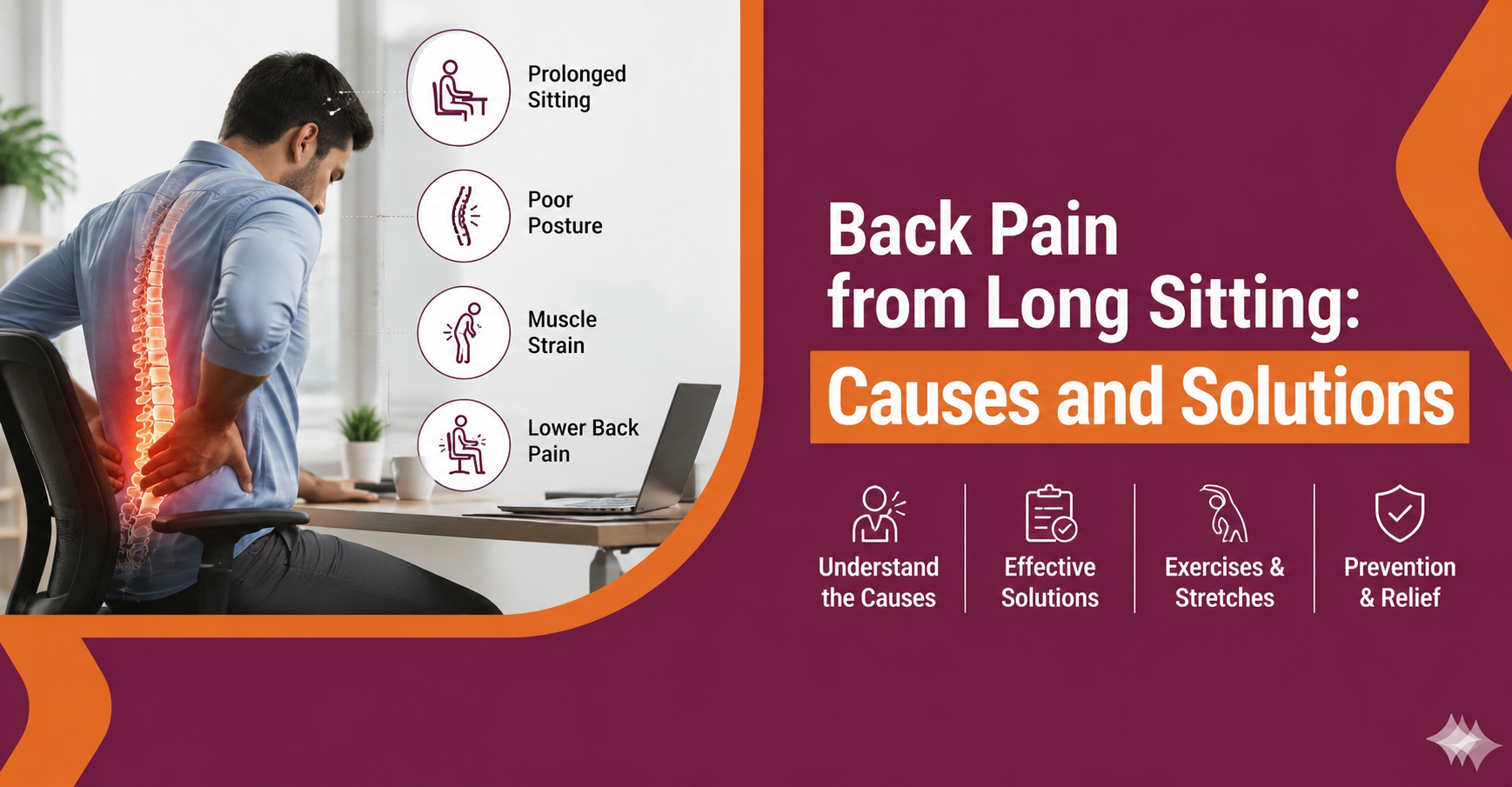
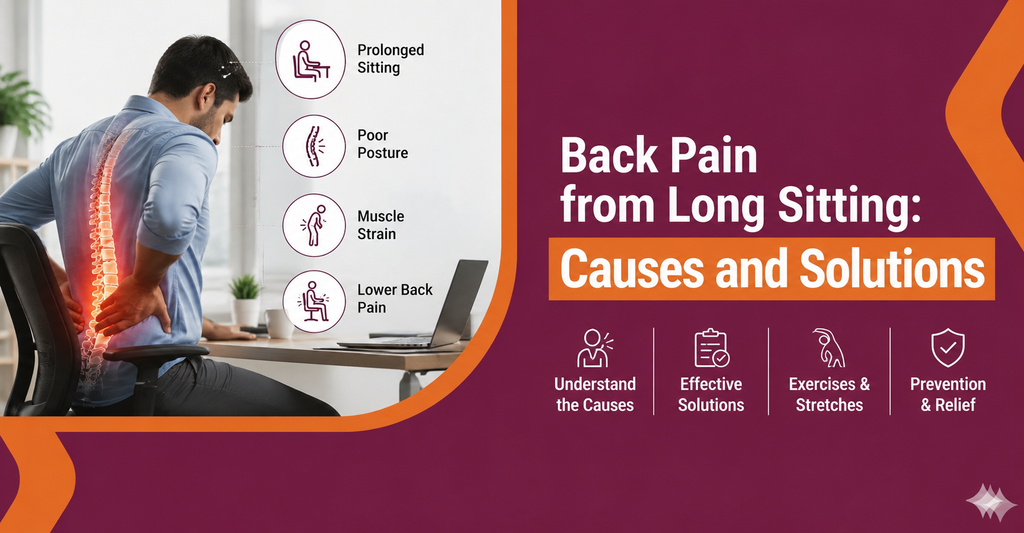
One of the major reasons for back pain while sitting is maintaining the same position for too long. When the body remains stationary, certain muscles may become tight while others become weak. This can increase pressure on the lower back and contribute to lumbar pain. Prolonged sitting and back pain are often closely connected, particularly when a person sits without adequate back support. Another important factor is poor posture and back pain. Slouching, leaning forward toward a computer screen, sitting with the shoulders rounded, or keeping the head bent for extended periods can place additional stress on the spine.
Office-related back pain may also develop because of an unsuitable chair, incorrect desk height, poorly positioned monitor, or lack of regular breaks. In some cases, prolonged sitting can contribute to muscle strain, stiffness, and reduced flexibility. Existing spinal conditions may also become more noticeable after extended periods of sitting. While occasional discomfort may improve with rest and movement, persistent or severe pain should be evaluated by a qualified healthcare professional.
How to Relieve Back Pain
Learning how to relieve back pain starts with improving everyday sitting habits. A supportive chair that allows the feet to rest comfortably on the floor can help maintain a better position. The lower back should receive adequate support, and the computer monitor should ideally be positioned at a comfortable eye level. Maintaining an ergonomic sitting posture can reduce unnecessary strain on the back and neck.
Taking regular movement breaks is equally important. Instead of sitting continuously for several hours, stand up, walk around, or gently move your body every so often. Simple stretches for back pain may help relieve tight muscles and improve flexibility. Depending on the individual’s condition, appropriate back pain exercises can strengthen the muscles that support the spine. However, exercises should be performed correctly, especially when pain is persistent or associated with another orthopedic condition.
Back Pain Relief and Prevention
Effective lower back pain relief is not always about medication or treatment procedures. Developing healthy sitting habits, maintaining an appropriate body weight, staying physically active, and avoiding prolonged periods in one position can contribute to better back health. Regular walking and suitable strengthening exercises can help improve muscle support and flexibility.
Prevention of back pain is particularly important for people whose jobs require long hours at a desk. Adjusting the workstation, using proper lumbar support, keeping the screen at an appropriate height, and taking regular breaks can make a significant difference. Good posture should also be maintained while using mobile phones, watching television, or travelling for long periods.
When to Seek Back Pain Treatment
Not every episode of back pain requires medical treatment, but persistent chronic back pain, recurring sitting back pain, or pain that interferes with normal activities should not be ignored. Professional evaluation can help identify the underlying causes of lower back pain and determine an appropriate approach to back pain treatment. If back pain is accompanied by significant weakness, numbness, difficulty walking, or other concerning symptoms, medical attention should be sought promptly.
Conclusion
Back pain caused by prolonged sitting can often be reduced by improving posture, staying active, taking regular breaks, and following appropriate back pain management strategies. For persistent or recurring symptoms, consulting an experienced orthopedic doctor in Hyderabad can help with proper evaluation and treatment. Dr. Madhu Reddy (orthopedic surgeon) provides orthopedic care at MM Ortho Hospital, where patients can seek professional guidance for back and musculoskeletal concerns. The hospital also provides specialized orthopedic services involving a knee replacement surgeon, hip replacement surgeon, and orthopedic pediatric surgeon, helping patients receive comprehensive orthopedic care based on their individual needs.