



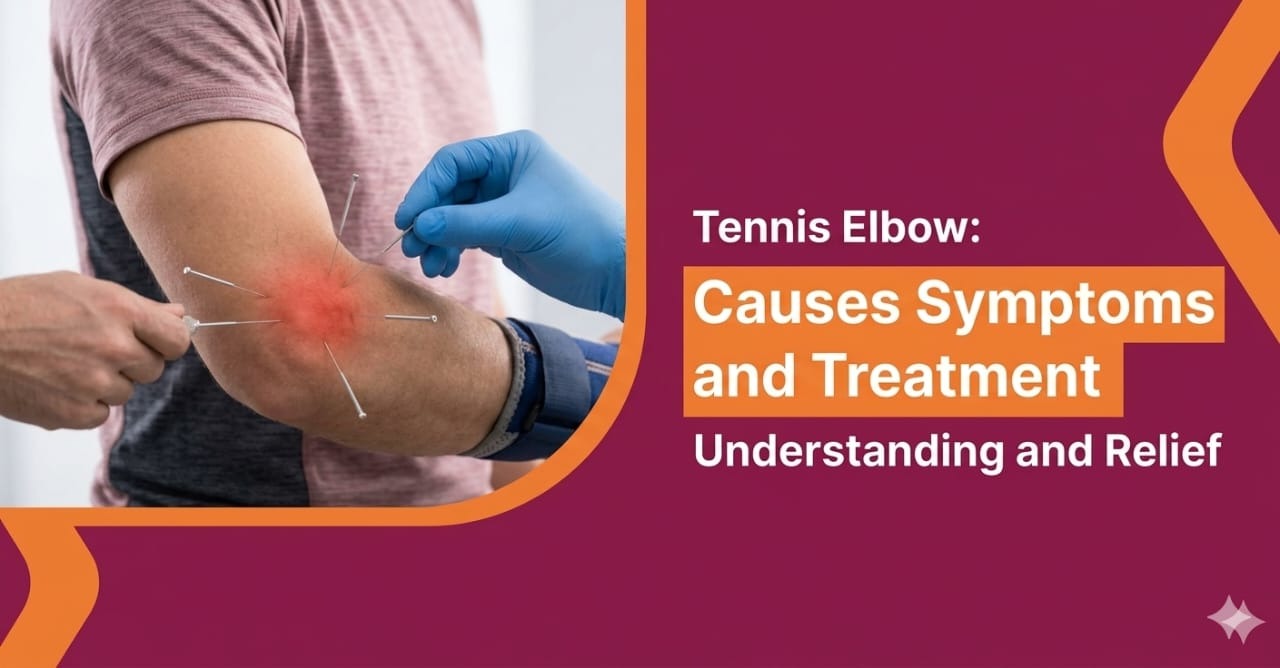
Tennis Elbow, medically known as Lateral Epicondylitis, is one of the most common conditions affecting the elbow joint. Despite its name, this condition does not only affect tennis players. In fact, many people who have never played tennis experience this painful condition due to repetitive arm movements at work or during daily activities. Whether you are an office worker, carpenter, painter, mechanic, athlete, or homemaker, repetitive strain on the forearm muscles can lead to Tennis Elbow Pain and significantly impact your quality of life.
What is Tennis Elbow?
Tennis Elbow is a type of repetitive strain injury that develops when the tendons connecting the forearm muscles to the outer part of the elbow become irritated or damaged. This results in elbow tendon inflammation, causing discomfort and reduced arm function. Since the tendons are responsible for gripping, lifting, and twisting motions, even simple daily tasks can become painful.
Tennis Elbow Causes
Understanding Tennis Elbow Causes is essential for preventing the condition. The most common cause is repeated stress on the forearm muscles and tendons. Activities that involve repetitive wrist extension or gripping can gradually create microscopic tears in the tendon.
Common causes include:
- Repetitive use of hand tools
- Playing racket sports with improper technique
- Frequent typing or computer work
- Lifting heavy objects incorrectly
- Painting, plumbing, or carpentry work
- Gardening and household chores
- Repetitive gym exercises without proper form
Although it commonly affects adults between 30 and 50 years of age, anyone performing repetitive arm movements is at risk.
Tennis Elbow Symptoms
Recognizing Tennis Elbow Symptoms early can help prevent long-term complications. Symptoms usually develop gradually and worsen over time if left untreated.
Common symptoms include:
- Pain on the outside of the elbow
- Tenderness around the bony prominence of the elbow
- Elbow pain while lifting everyday objects
- Difficulty shaking hands or opening jars
- Weak grip strength
- Pain during wrist extension
- Discomfort while holding a coffee mug or using a computer mouse
- Arm fatigue after repetitive activities
These symptoms may initially appear mild but can interfere with work, sports, and daily activities if ignored.
Diagnostic Clinical Tests for Tennis Elbow
Several clinical tests help orthopedic specialists diagnose Tennis Elbow (Lateral Epicondylitis) by reproducing pain at the lateral epicondyle and assessing the function of the wrist extensor tendons.
1. Cozen’s Test (Most Common Clinical Test)
Purpose: Evaluates the extensor carpi radialis brevis (ECRB) tendon.
Procedure:
The patient sits with the elbow flexed to 90° and the forearm pronated.
The examiner stabilizes the elbow while the patient makes a fist, extends the wrist, and radially deviates the wrist against resistance.
Positive Test:
Sharp pain over the lateral epicondyle indicates Tennis Elbow.
2. Mill’s Test
Purpose: Stretches the wrist extensor muscles and tendons.
Procedure:
The examiner palpates the lateral epicondyle.
The patient’s forearm is pronated, the wrist is fully flexed, and the elbow is passively extended.
Positive Test:
Pain over the lateral epicondyle during stretching suggests Lateral Epicondylitis.
3. Maudsley’s Test (Middle Finger Extension Test)
Purpose: Assesses the extensor digitorum tendon.
Procedure:
The patient extends the middle finger against resistance while the elbow is extended.
Positive Test:
Pain at the lateral epicondyle indicates involvement of the extensor tendons.
4. Chair Lift Test
Purpose: Evaluates functional pain during gripping.
Procedure:
The patient lifts a chair using one hand with the elbow fully extended and the forearm pronated.
Positive Test:
Pain over the lateral aspect of the elbow while lifting the chair.
5. Handshake Test
Purpose: Functional assessment during routine activity.
Procedure:
The patient performs a firm handshake with the examiner.
Positive Test:
Sudden pain over the lateral epicondyle during the handshake.
6. Resisted Wrist Extension Test
Purpose: Evaluates the wrist extensor tendons.
Procedure:
The patient extends the wrist while the examiner applies downward resistance.
Positive Test:
Pain over the lateral epicondyle confirms tendon irritation.
7. Grip Strength Test
Purpose: Measures weakness caused by Tennis Elbow.
Procedure:
Grip strength is assessed using a hand dynamometer or by comparing both hands.
Tennis Elbow Treatment
The goal of Tennis Elbow Early diagnosis allows treatment to begin before significant tendon damage occurs.Treatment is to reduce pain, promote healing, and restore elbow function. Most patients recover successfully without surgery.
Non-Surgical Tennis Elbow Treatment
The majority of patients benefit from non-surgical tennis elbow treatment, which may include:
- Rest from aggravating activities
- Ice application to reduce inflammation
- Anti-inflammatory medications
- Elbow braces or support straps
- Activity modification
- Ergonomic workplace adjustments
Tennis Elbow Exercises
Specific Tennis Elbow Exercises play an important role in healing. These exercises improve tendon strength and flexibility while gradually restoring function.
Common exercises include:
- Wrist extensor stretching
- Wrist flexor stretching
- Eccentric wrist strengthening
- Grip strengthening exercises
- Forearm rotation exercises
Tennis Elbow Surgery
If symptoms persist for six to twelve months despite conservative care, Tennis elbow surgery may be considered. Surgical treatment involves removing damaged tendon tissue and repairing healthy tissue. Fortunately, only a small percentage of patients require surgery, and most recover well with rehabilitation afterward.
Tennis Elbow Recovery
Tennis Elbow Recovery varies depending on the severity of tendon damage and adherence to treatment. Mild cases often improve within six to eight weeks, while more advanced cases may require several months of rehabilitation. Following the recommended exercise program and avoiding repetitive strain significantly improves long-term outcomes.
Tennis Elbow Prevention
Preventing Tennis Elbow involves reducing repetitive stress on the elbow and forearm.
Helpful prevention strategies include:
- Warm up before sports or physical work
- Use proper sports techniques
- Strengthen forearm muscles regularly
- Take frequent breaks during repetitive tasks
- Improve workplace ergonomics
- Lift objects using correct posture
- Avoid excessive gripping force
Early attention to minor elbow discomfort can prevent chronic tendon damage.
Conclusion:
Ignoring persistent elbow pain can lead to prolonged discomfort and reduced arm function. If you experience symptoms such as pain on the outside of the elbow, weak grip strength, or elbow pain while lifting, seeking timely orthopedic treatment for elbow pain is essential. An experienced orthopedic doctor in Hyderabad can accurately diagnose the condition and recommend the best treatment for tennis elbow, including advanced non-surgical care, physiotherapy, or surgery when required. Patients requiring specialized orthopedic care for other joint conditions can also benefit from consulting an experienced knee replacement surgeon, hip replacement surgeon, or orthopedic pediatric surgeon for comprehensive musculoskeletal treatment. For expert diagnosis, personalized treatment, and complete rehabilitation, consult Dr. Madhu Reddy (Orthopedic Surgeon) at MM Ortho Hospital, where patient-focused care and advanced orthopedic solutions help individuals recover from sports injuries, elbow conditions, and a wide range of bone and joint disorders.